
Greetings and welcome to belated Flute Friday/Sunday. One of the pain points that many of us teachers face is how to encourage our students to practice regularly. Unlike other extracurricular activities such as soccer and gymnastics, learning a musical instrument involves a lot of individual focus time, often away from friends and family (save the occasional pet who loves listening to flute music) in a room by themselves. Sounds a lot like music jail, I get it. This may come easier to more introverted students and finding a quiet space to practice may be challenging in larger family home environments. The old-school practice cards of yesterday offered a very basic practice reporting framework, but were often full of tall tales from students who knew how to forge a parent’s signature well. The point is not the number of minutes reported but the consistency and quality of the time that is devoted to their instrument. In today’s blog, I offer a few practical tips to help teachers open a dialog with their students about practice. Practice requires a basic plan but implementing that plan can involve a creative approach.
1. Set Basic Practice Expectations. Outline practice expectations in your studio policies, online on studio websites, or even verbally in the first couple of lessons. This sets everybody up for success at the beginning! For beginners, I recommend 15-30 minutes/day (5 times per week), intermediate students can bump up to 30-45 minutes/day, and advanced high school students should aim for 60-90 minutes/day. It is also important to check in with students periodically to gage if they are finding it difficult to log in those hours. Mid school-year might see competing responsibilities with softball practices, track meets, and recitals on other instruments. Try not to corner the student – They might feel that they are in trouble or letting you down. It’s totally okay to be busy! Perhaps we can loosen the reigns during the busy season and sprinkle more practice time in the off-season. Have that conversation and work together to come up with a reasonable plan.
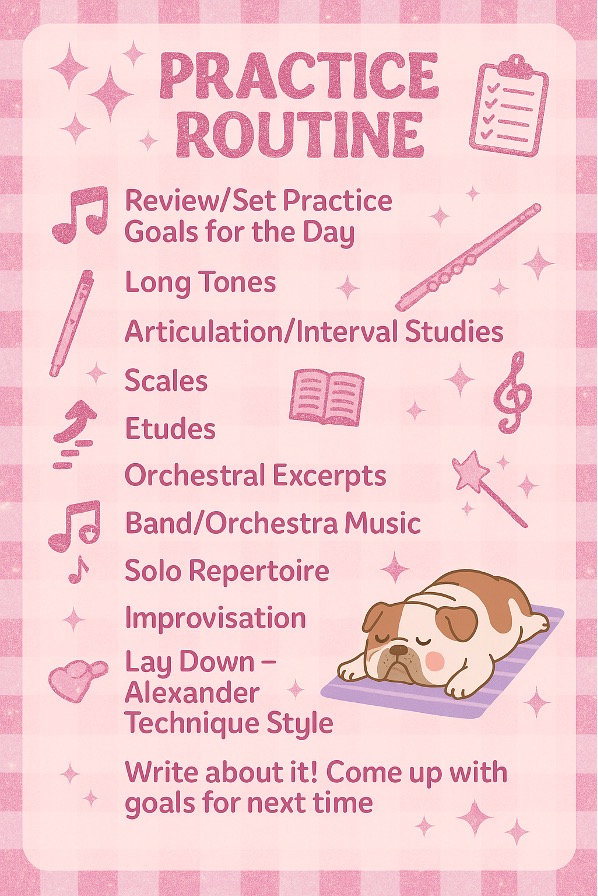
2. Teach Students How to Practice. When I was a young flutist, my band director (who could see that I was loving playing the flute) gave me a handout published by Richard Hahn, who, at the time, was the flute professor at the University of Idaho. This pamphlet outlined how to organize your practice time. I did not yet have a private teacher, so having this info was really valuable to me. Warm-ups followed by long tones, scales, etudes, band music, and solos. Easy peasy! I had a lot of that in my band book and other books that my band director recommended to me. I had a framework! (Not that I knew what that meant at a young age..) It helped me know where to start and to make sure I had good material to work on in each category. I try to instill this into my students but tell them it is always okay to flip the order or have a creative, practice-from-the-heart, session.
3. Make Sure Students Have a Quiet Space at Home to Practice. This will require a conversation with the student and their parents. It doesn’t have to be anything fancy – Just a room with a door that is free from outside distractions. A room equipped with a mirror is a major bonus (as I often ask students to practice in front of a mirror)! This is also a good time to suggest that phones been silenced for the amount of time that the student has committed to practice. A post-practice reward could be phone time on their favorite app.
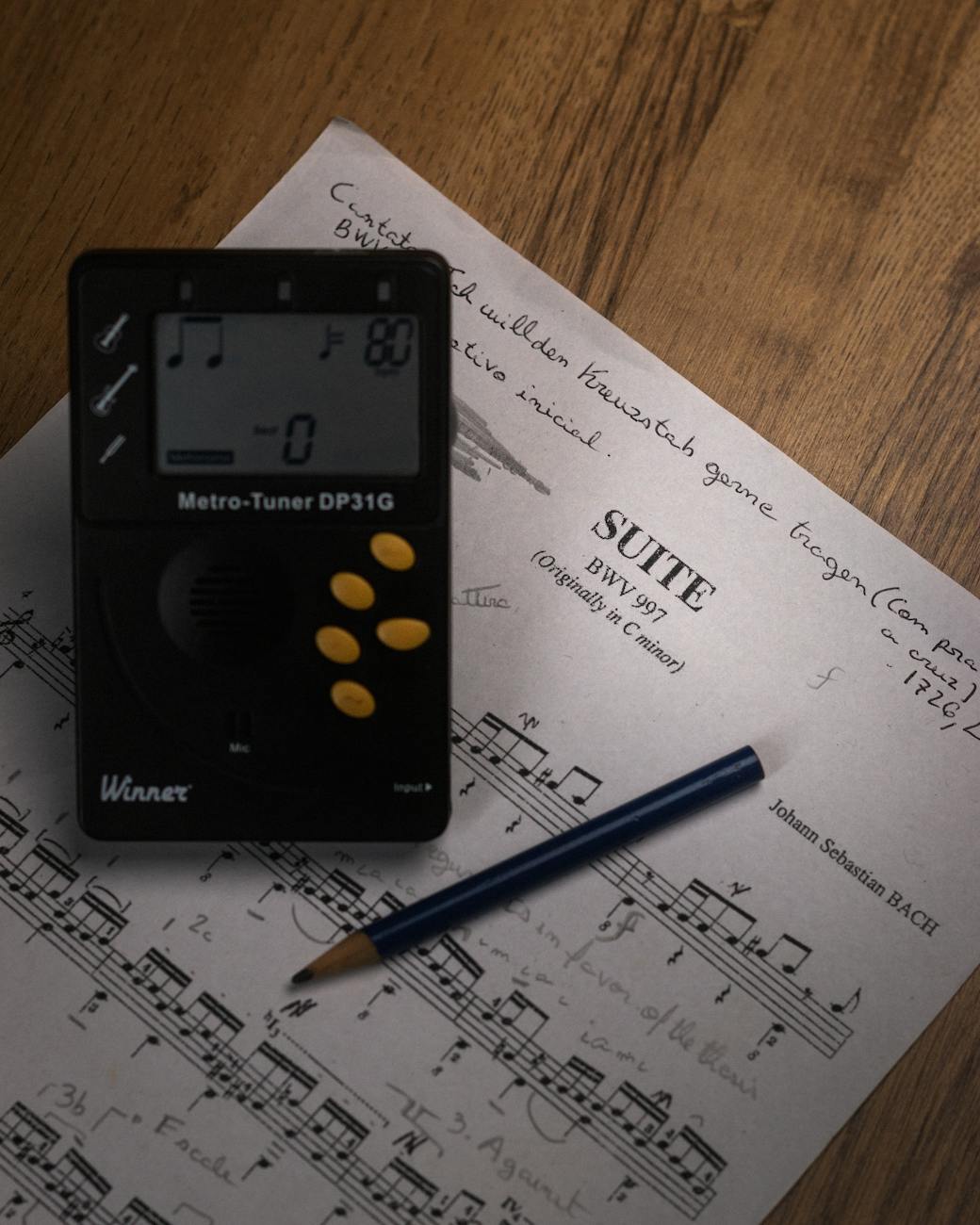
4. Practice Smarter Not Harder. 15 minutes of mindlessly drilling scales may not be as productive as working on those scary difficult 16th note runs. Work with your students to establish practice priorities. Help them bracket sections in their music that might require more attention and discuss creative ways to woodshed those passages. This is why I ask students to bring a notebook to their lessons. We can identify very specific goals for them to work on at home so their practice time is spent as efficiently as possible.

5. Make Sure Parents are Onboard. No – I don’t mean ask parents to micromanage their child’s practice time. Parents need to know what the expectations are around practice and how best to support their budding flutist. It may be as simple as being a cheerleader for the student (“You sound great! What are you working on in your flute lessons?”). Or it could involve encouraging the student to play a tune for their family members once a week (living room concerts, anyone?). Or it may be gentle reminders to practice with a reward on the other side of that practice routine (ex. post practice ice cream).
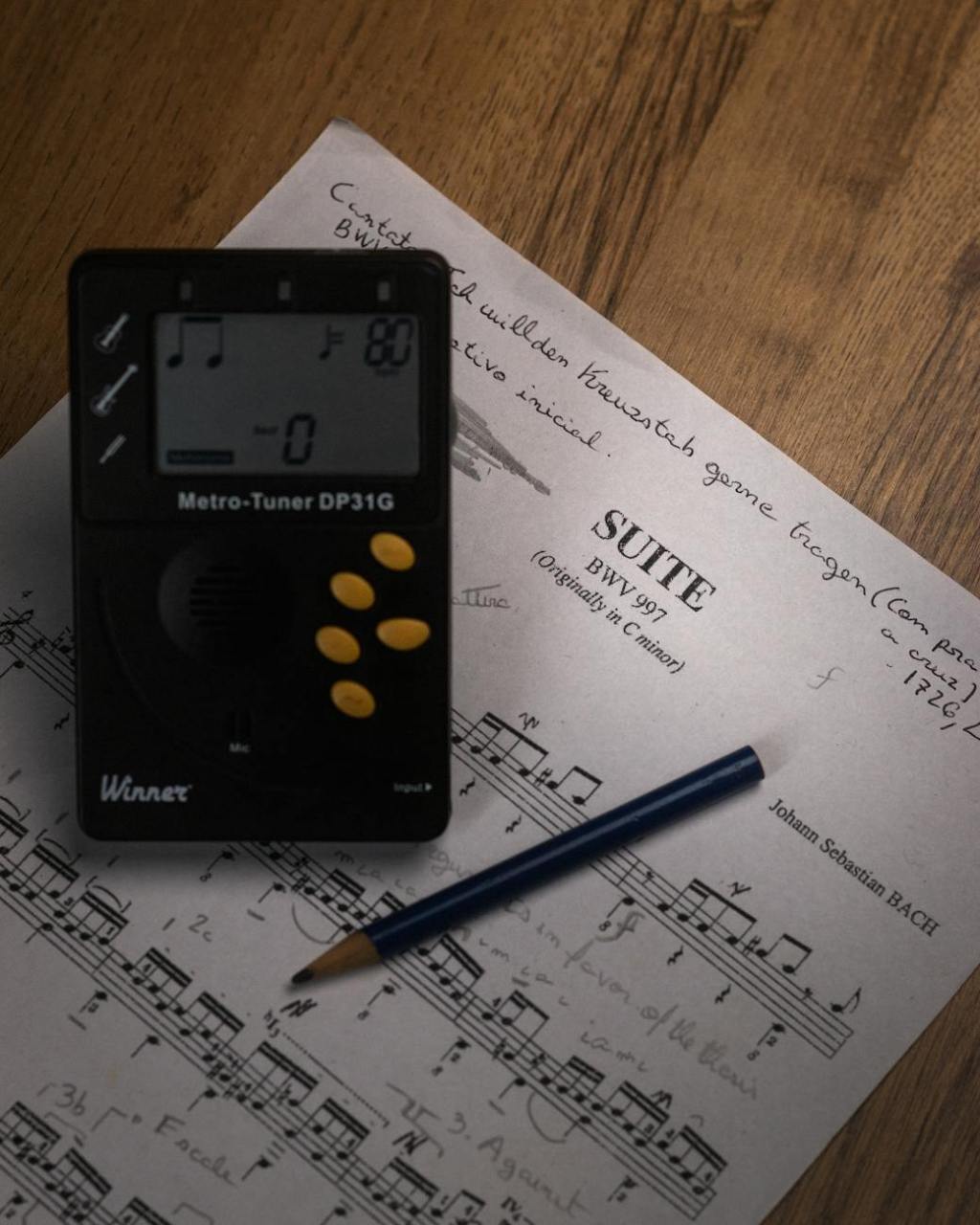
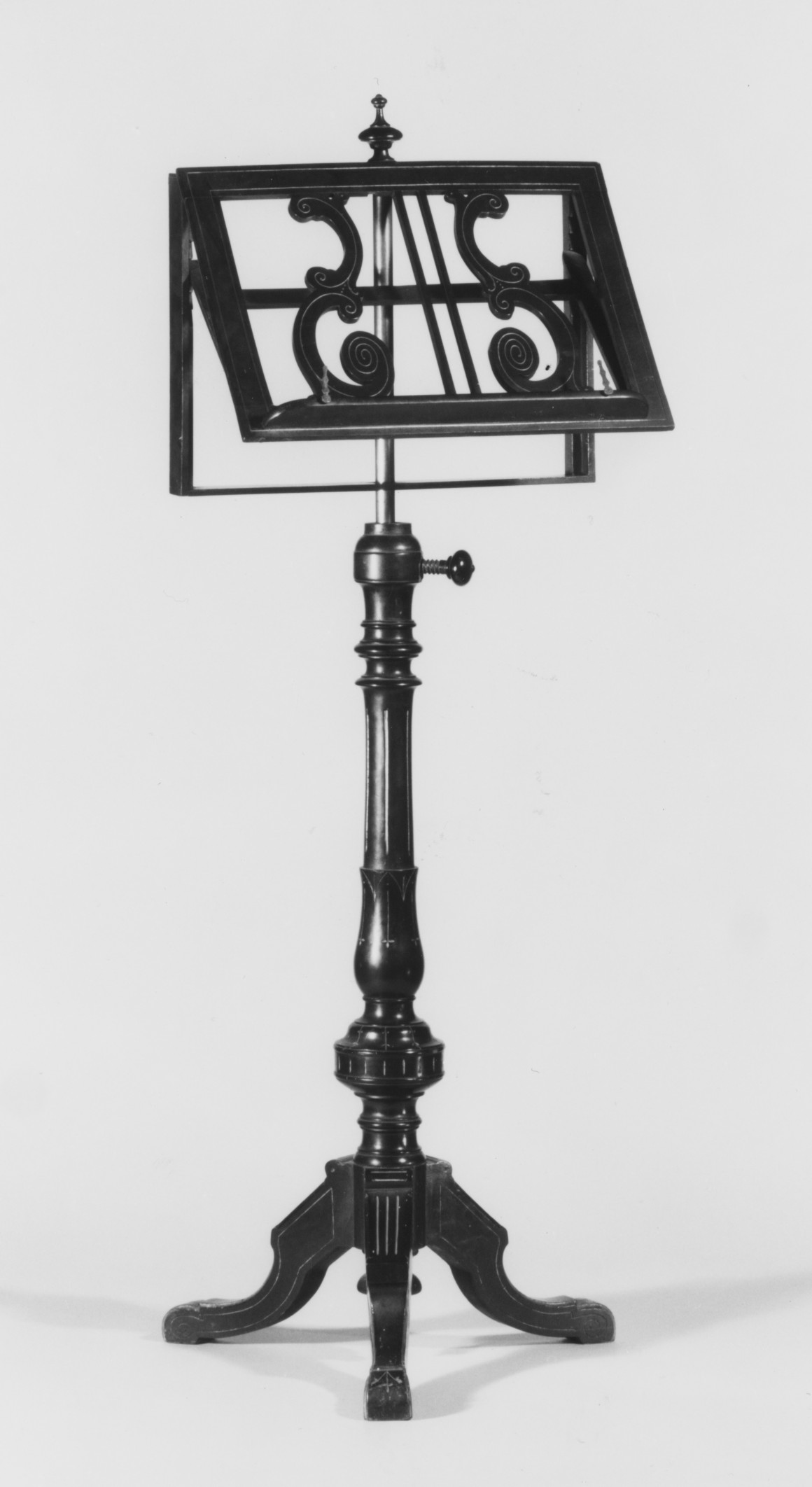
6. Make Sure Students Have the Right Gear. Do they have a music stand to use at home? Have they got a cleaning cloth and polishing cloth (and do they know how to use both properly?)? Are they equipped with pencils to mark things in their music? Do they have a tuner and metronome? Take a few minutes during your lessons to talk flute gear. Provide some recommendations on your favorite brands and your go-to products. Share links to your favorite shops. Check in to make sure students have what they need. Ask questions – There may be a product to help them with any practice pain points (ex. Flute Gels, practice notebooks, apps, etc.).
7. Assign a Few Fun Pieces Students will Recognize. Sometimes Bach is not all the rage with the younger crowd. There is nothing wrong with mixing in a few Disney tunes with exercises from the Rubank Method. There are plenty of Disney song books on Amazon (one of my favorites is 101 Disney Songs: for Flute (https://amzn.to/3QHczAo (affiliate link)). I too had a Disney song book when I was first learning the flute! There are a lot of lessons buried within Disney tunes. Make it fun!
8. Ask Students to Record Practice Session Snippets. Most students these days have access to an iPhone or a computer with video recording capabilities. To get a good idea of their practice process, you could ask students to send you short 5-minute videos of a practice session. At their next lesson, you could provide useful tips on how to make their time even better (and, of course, give snaps for a job well done). You might also send them clips of your own practice sessions. Lead by example!

9. Create Studio Practice Challenges. Sometimes the best motivation is some friendly competition. Create a Practice Olympics challenge where the student who practices the most over 30 days will receive a fun prize like a Flute Bling or another super cool product. There could even be a longer competition for a bigger prize at the end of the school year such as a snazzy new flute bag.
10. Check in with the Band or Orchestra Director. It is always great to have a second set of ears. If the student is in a school band or orchestra program, the director may have their own practice expectations. Make sure you are both on the same page. Set up a phone call or meeting to discuss practice policies and if there are any upcoming performances that may require more practice than usual. It is important that students do not feel like they need to choose to practice for one thing over another. Studio teachers and band/orchestra directors are on the same page – We want our flute students to absolutely slay on the flute!
***
How do you motivate your students to practice? Do you use practice cards? Are your practice expectations clear? What challenges do your students face in their practice routine? What feedback do you typically hear from parents regarding practice? Please comment below!
Happy fluting!


 Rachel Taylor Geier
Leave a reply to Favorite blog posts, May 2024 | Bret Pimentel, woodwinds Cancel reply