If you are interested in learning more about any of the below research projects or presentations, please contact Dr. G. at racheltgeier@gmail.com to obtain copies of conference papers, presentation slides, or just to talk shop!
CONFERENCE PRESENTATIONS & LECTURES
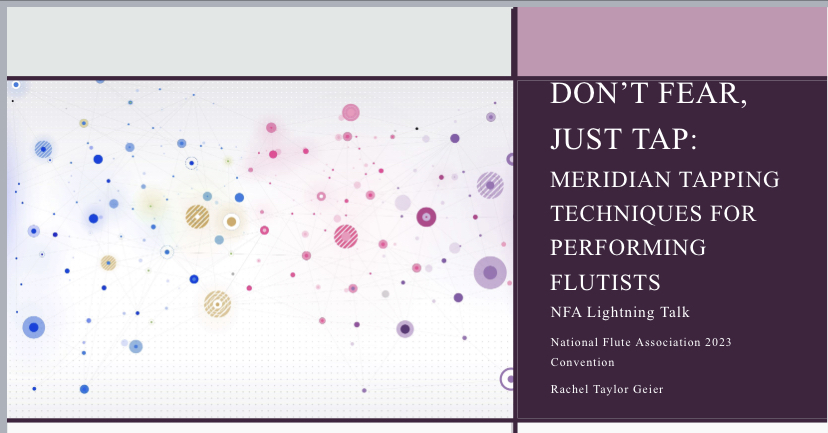
National Flute Association (NFA) Convention 2023 – Phoenix, Arizona
Lightning Talk – Meridian Tapping Techniques
Presentation Slides – Meridian Tapping Techniques
***
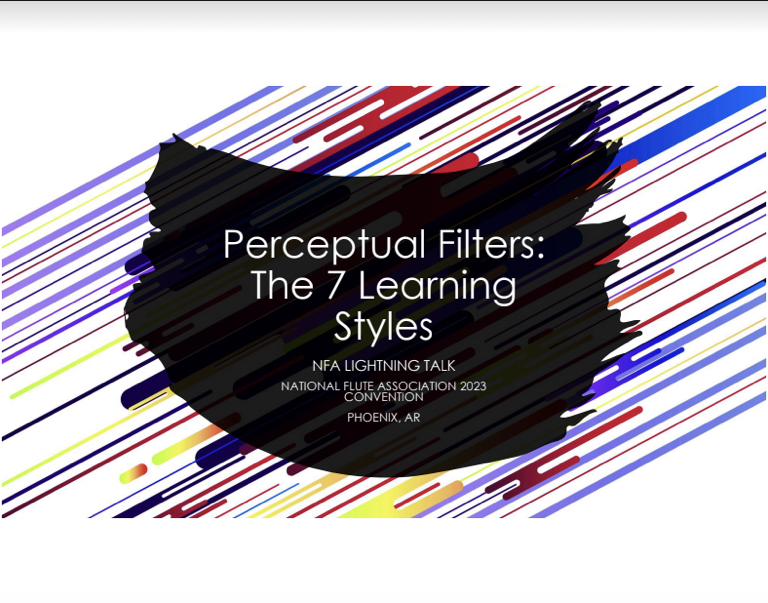
National Flute Association (NFA) Convention 2023 – Phoenix, Arizona
Lightning Talk – Perceptual Filters: The 7 Learning Styles
Presentation Slides – Perceptual Filters – The 7 Learning Styles
****
Opera Without Words – Character Development in Mozart Flute Concerti in D Major and G Major
Canadian Flute Association Convention
University of Toronto, June 19, 2015
This presentation addressed the various compositional techniques used in Mozart’s flute concerti that depict masculine and feminine “characters” and how these “characters” interact with one another to create an instrumental opera without words. Mozart shows us that music does not necessary need a libretto to convey intricate relationships between multiple characters.
Breaking Point – Musicians and Professional Burnout
College Music Society – Pacific Northwest Regional Conference
University of Montana, April 11-12, 2014
Presentation on the many definitions of “burnout,” the symptoms of burnout, and the personality traits that attract burnout. Explores possible solutions to burnout and outlines the differences between being “stuck” and being in a state of “burnout,” arguing that a musician that is simply “stuck” may find other ways to quickly improve conditions before reaching the critical stage of burnout.

Technicolor Score – Using Color as a Tool for Score Preparation
College Music Society – Pacific Northwest Regional Conference
University of Montana, April 11-12, 2014
Demonstration on how to use color in a score, simply by creating markings with colored pencils, to delineate changes in tone color (using two types of color spectrums), categorize variances in articulation, dynamics, tempo changes, and style (making alterations easy to anticipate with a quick glance), and outline the principal notes in each phrase in a Shenkerian style background/foreground analysis.

Rebellious Reinterpretations
College of Liberal Arts Graduate Students Symposium
University of Nevada-Reno, February 22, 2014
This paper asserts that subsequent editions of the Altès Méthode, such as Barrère’s Twenty-Six Selected Studies for the Flute, misrepresent the original intent of the work as a pedagogical tool that, by our own modern educational standards, promotes a systematic and intrinsically rewarding approach to flute study. It is important to determine whether the originality of an editor appropriately conveys a compromise between the basic intent of the composer and the need to outline something new within the music.
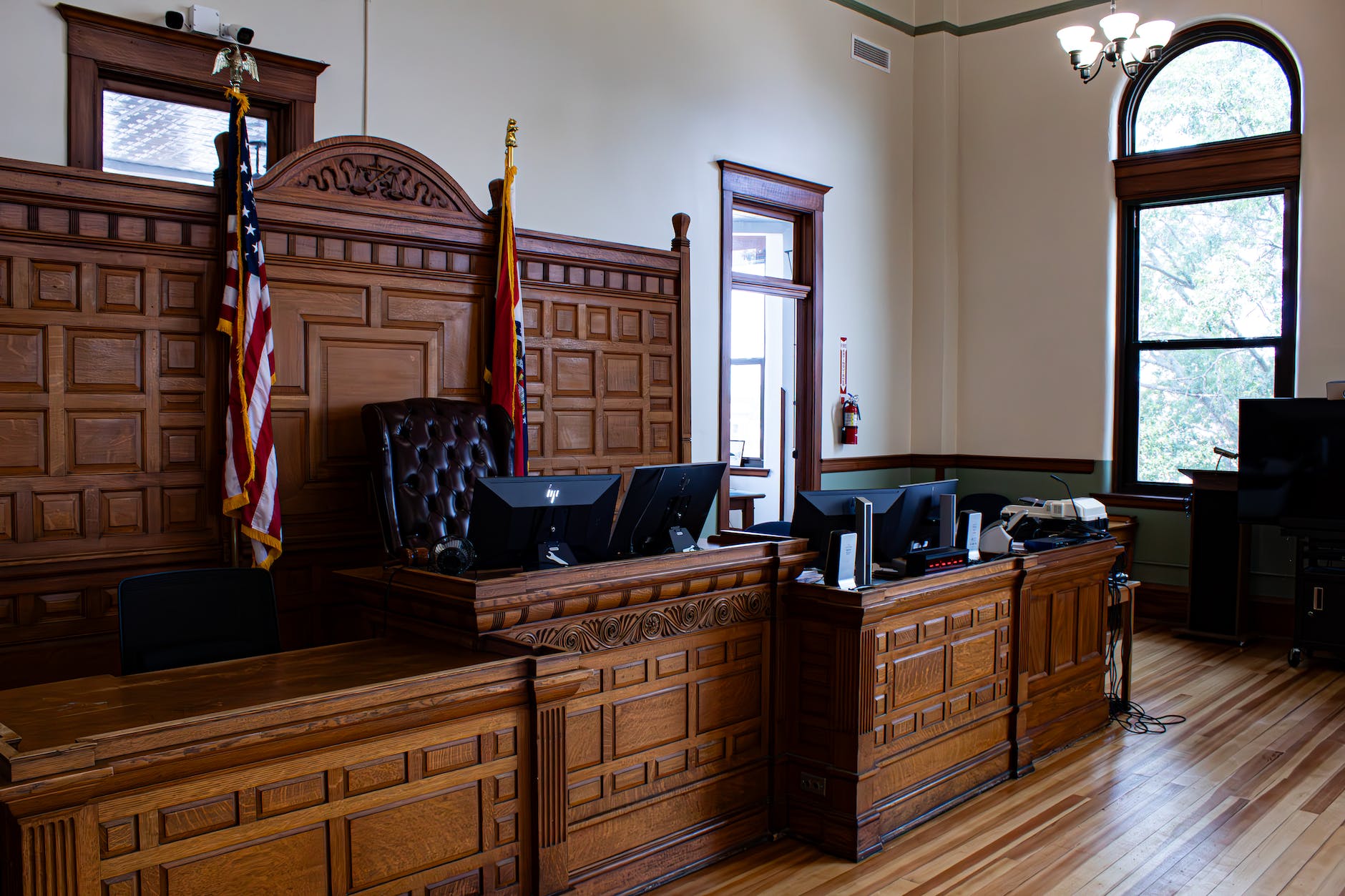
All the World’s a Stage…Even the Courtroom
Guest Lecture, UC Davis King Hall Civil Rights Clinic Seminar
University of California, Davis, December 5, 2013
Presentation on Alexander Technique principles and their usefulness in courtroom preparation. Participants were taken through a series of five exercises including a traditional lay down, reverse lay down, the mirror exercise, the wall exercise, and a visualization exercise centering on the inhibition of habitual tendencies and direction of proper use.
Research Projects
Misrepresentations – A Comparative Analysis of the Altès Méthode and Subsequent Reinterpretations
An examination of the Méthode pour Flûte by Henri Altès and the manner in which subsequent editions of the work deviate from the pedagogical objectives set forth in the original 1885 edition. DMA Paper Abstract
Minnesota Nice – Irish Music Ethnography, January-May 2009
Examines the musical and extramusical interactions between Irish musicians, written from a classically trained perspective. Field work conducted at Keegans Irish Pub in Minneapolis, MN.



 Rachel Taylor Geier
Leave a comment